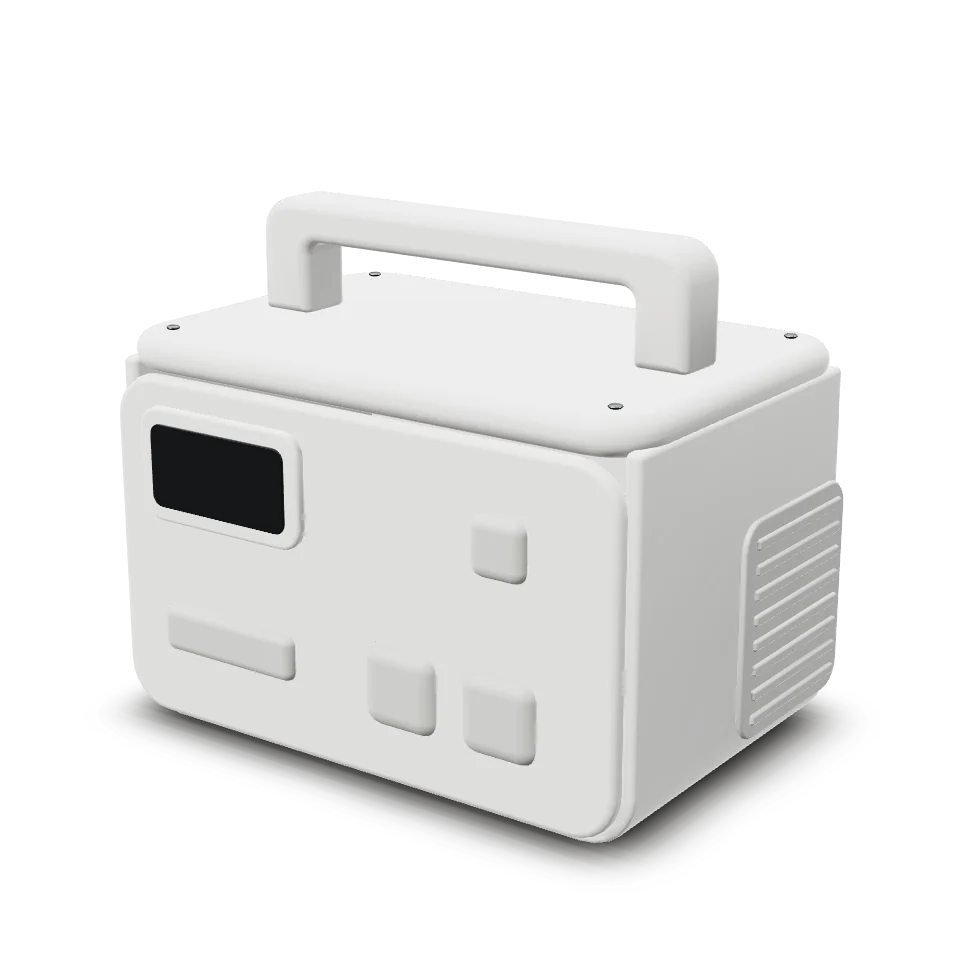
Most electric bicycle fires are related to batteries and charging. Battery housings, charger housings and battery swap cabinets must all be flame retardant and must not produce flaming drips.
Advice · Candidates
Advice
Battery housings should reach V-0 to GB 43854-2024 and be validated for drop and crush. Charger housings must also consider glow-wire requirements. Use high-CTI flame-retardant reinforced materials for connectors and charging sockets.
Battery compartment / under-seat bin (in contact with battery)
Shared vehicles: durability and repair cost
Pain point
Shared two-wheelers are used heavily and often knocked and dropped. Battery compartments are plugged and unplugged repeatedly.
Advice · Candidates
Advice
Use high-toughness grades for covers and battery compartments, and run life tests on snap fits and plug-in points. Color matching at the compounding stage reduces painting, and scratches do not expose a different base color.
New standard: body parts must be flame retardant too
Pain point
Body covers used to be made mostly of non-flame-retardant ABS, PP or ASA. The new national standard requires V-1 for these parts, and V-0 for electrical parts and parts in contact with the battery. Flame-retardant compounding affects toughness, appearance and weather resistance.
Advice · Candidates
Advice
First classify each part under the new national standard: electrical parts, battery-contact parts, other parts. Then test the flammability rating at the actual wall thickness. For appearance parts, test flammability, low-temperature impact and color difference after xenon-arc weathering together.
Total plastic mass must not exceed 5.5 % of the vehicle mass, with the battery pack housing counted. Vehicle designs must reduce the number of plastic parts or their wall thickness.
Advice
Use stiffer materials to thin the walls, for example glass-fiber-reinforced PP instead of standard PP. Use high-flow flame-retardant PC or PC/ABS for battery housings, with a thin-wall design. Validate impact and stiffness before reducing material.
Vehicles and battery swap cabinets face sun and rain for years. Housings fade and become brittle, and crack more easily in falls in winter.
Advice
Test impact and color difference of appearance parts after xenon-arc weathering. Set the low-temperature impact temperature by region of use. For appearance parts of new-national-standard models, choose a flame-retardant weather-resistant formulation.
Plastic parts for e-bikes, e-motorcycles, shared two-wheelers, batteries, chargers and battery-swap cabinets: body panels, battery cases, charger housings, controller boxes, lamp housings and lenses, dashboards, mudguards, seat bases, connectors and motor covers.
80 °C, 4–6 h (desiccant dryer); moisture content 0.05–0.2 % recommended
Melt temperature
260–290 °C
Mold temperature
80–100 °C; upper end for a better surface
Why this material
Close to the motor and coils; vibration; road impacts
Industry overview and trends
Output keeps growing
In 2025, China produced about 54.9 million electric bicycles, up about 29 % on the previous year. From January to November 2025, industry revenue and profit grew about 21 % and 42 % respectively.
The new national standard is fully in force
The new Safety Technical Specification for Electric Bicycles (GB 17761-2024) has applied since 2025-09-01. It sets stricter requirements on fire resistance and flame retardancy, plastic content, tamper resistance and braking of the whole vehicle. In 2025, more than 12.5 million electric bicycles were traded in for new ones, speeding up the replacement of old bikes with compliant new ones.
Two provisions matter most for plastic parts
First, non-metallic materials must be flame retardant: electrical circuits and connected electrical parts, and parts in direct contact with the battery pack, must reach V-0, while trim, mudguards and other non-metallic parts must reach V-1 (to GB/T 5169.16; wires, tires and some others excepted). Second, total plastic mass must not exceed 5.5 % of the vehicle mass, with the battery pack housing included. This means body plastic parts must be both flame retardant and reduced, and some covers will switch to metal or thinner walls.
Battery safety is regulated separately
Lithium-ion batteries for electric bicycles have their own mandatory national standard (GB 43854-2024, in force since 2024-11-01). Non-metallic battery pack housings must reach V-0, and printed boards V-1.
Smart features and exports
About 20 % of e-bikes are now smart, with more electronics in displays, control units and lights. Export models must also meet target-market requirements, such as EN 15194 for electrically power-assisted cycles in the EU; the Batteries Regulation, Regulation (EU) 2023/1542, which is in force and requires LMT batteries to be replaceable by an independent professional from 2027-02-18; and UL 2849 and UL 2271, which are common in the US.
China produced about 54.9 million e-bikes in 2025 (about +29 %).
The new e-bike safety standard GB 17761-2024 has applied since 2025-09-01. More than 12.5 million e-bikes were traded in for new ones in 2025.
Two rules matter most for plastics: flame retardancy and the 5.5 % cap on plastic mass. Non-metallic parts in electrical circuits and parts in direct contact with the battery pack must reach V-0; other non-metallic parts such as trim and mudguards must reach V-1 (GB/T 5169.16).
Lithium-ion batteries for e-bikes follow GB 43854-2024 (in force 2024-11-01): non-metallic battery enclosures V-0, printed boards V-1.
About 20 % of e-bikes are now "smart". Export models must meet target-market rules such as EN 15194, Regulation (EU) 2023/1542 (LMT batteries replaceable by an independent professional from 2027-02-18), UL 2849 and UL 2271.
Part-to-material guide
Full list · 13 parts
This table shows common industry practice for first-round selection. The final choice depends on the applicable standards, the OEM's material specification and validation results (to be verified by GREENPOLYMER).
Example grade / typical values — to be corrected by GREENPOLYMER
Dashboard housing, display cover
Typical materials: Flame-retardant PC/ABS (housing), transparent PC (cover lens)
Why
Electrical part; the cover lens must transmit light and resist scratches
Key requirements
V-0 (housing); cover lens flammability: selected per GB 17761-2024 and the vehicle maker's specification; V-0 and V-1 options available; light transmittance; UV resistance; scratch resistance
Common standards
GB 17761-2024; ISO 13468
GREENPOLYMER grade
Housing: GRN-PCA-N510; cover lens: GRN-PC-L110 (flammability: selected per GB 17761-2024 and the vehicle maker's specification; V-0 and V-1 options available). IR or light sensor windows: IR-transmissive black PC is available for sensor and LiDAR windows
Example grade / typical values — to be corrected by GREENPOLYMER
Notes
Under the new national standard, electrical circuits and connected electrical parts (wires excepted) and parts in direct contact with the battery pack must reach V-0. Other non-metallic parts (such as trim and mudguards; tires excepted) must reach V-1. Thin flexible specimens can be rated to the VTM classes. Lamp covers, lenses and instrument cover lenses: selected per GB 17761-2024 and the vehicle maker's specification; V-0 and V-1 options available.
Total plastic mass must not exceed 5.5 % of the vehicle mass. Wire insulation, connectors, tires, circuit boards, components and light-emitting parts are not counted; the battery pack housing is counted. So body plastic parts must be reduced, and battery housings should be as light as possible.
The weather-resistant ASA, PC/ASA and PC/ABS grades (W series) are currently not flame retardant (HB). For body covers of electric bicycles under the new national standard, use the flame-retardant weather-resistant grade GRN-PCAS-W510.
GB 17761-2024, GB 43854-2024, EN 15194, UL 2849 and similar are vehicle or battery standards; what they certify is not the material itself.
Typical values. Refer to the actual TDS. V-1 and V-0 are rated at the actual wall thickness. For how GB/T 5169.16 relates to UL 94, refer to the test report.
GREENPOLYMER does flame-retardant, reinforcing, toughening and weather-resistant compounding. Formulations and costs can be adjusted to the flammability rating the new national standard sets for each part. Materials marked "Available as a project-based development" in the table can be developed with GREENPOLYMER engineers.
Flammability and electrical testing
In-house testing covers horizontal and vertical burning, glow-wire, needle flame and comparative tracking index (CTI), for screening during development (see "In-house testing" below).
Technical support
Material selection assessment and design advice such as thinner walls and ribs; mold flow analysis can be done together with your tooling team.
Halogen-free flame retardancy
GREENPOLYMER's flame-retardant technology focuses on halogen-free and fluorine-free solutions. Silicone-based flame-retardant grades do not use PTFE anti-drip agents.
Color matching
The Shenzhen Color Matching Center works to RAL and Pantone numbers and customer color plaques. Appearance parts can be color matched at the compounding stage, reducing painting.
Recycled grades
Each grade can be customized with recycled content (suffix -R). The recycled share is set per project, with traceability documents. Certificate to be uploaded.
Fast sampling
Free samples of 1–5 kg are available for standard grades, usually shipped in 3–7 working days. Custom formulation samples usually take 1–3 weeks.
Sites
The company headquarters and main plant are in Jiangxi, which is also home to a 3D printing filament industry cluster. GREENPOLYMER also has the Hangzhou Production Base, the Shenzhen Color Matching Center and the Dongguan Development Center. 6,000+ t capacity; 29,000+ m² total plant area.
Patents
8 invention patents.
In-house testing
Test equipment covers melt flow rate, Izod and Charpy impact, horizontal and vertical burning (UL 94 method), heat deflection temperature and Vicat, constant temperature and humidity, UV and xenon-arc weathering, XRF, TGA, DSC, glow-wire, needle flame, comparative tracking index (CTI) and salt spray. In-house tests are for development and quality control and do not replace third-party test reports or UL certification.
Customers and partners
Yadea, Hellobike.
3D printing in two-wheeler development
Use
Example
Recommended filament
Appearance samples
Styling reviews of front panels, side panels and instrument housings
Printed parts cannot replace injection-molded specimens for flammability certification. Test flammability ratings on injection-molded parts of the production grade.
The properties of printed parts depend on print orientation, layer thickness and infill.
Q1. Under GB 17761-2024, which plastic parts need V-0?
Non-metallic parts of electrical circuits and connected electrical parts (except wires), and parts in direct contact with the battery pack, need V-0. Other non-metallic parts such as trim and mudguards need V-1 (tires etc. excluded). The test method is GB/T 5169.16. Confirm part classification with the standard text and the test lab.
Q2. Does the battery case count toward the 5.5 % plastic limit?
Yes. The battery case counts. Wire insulation, connectors, tires, circuit boards, components and light-emitting parts do not. The battery case should also be designed light.
Q3. Can standard weather-resistant ASA be used for body panels under the new standard?
Standard weather-resistant ASA and PC/ASA are not flame retardant and do not reach V-1. Body panels on GB 17761-2024 e-bikes need a flame-retardant weather-resistant formulation, validated for flammability, low-temperature impact and color change after aging. We offer GRN-PCAS-W510, a flame-retardant weather-resistant PC/ASA (V-1 design target; refer to the test report).
Q4. What should I watch for when exporting e-bikes to Europe?
E-bikes are usually assessed to EN 15194. Batteries must meet Regulation (EU) 2023/1542; from 2027-02-18, LMT batteries must be removable and replaceable by an independent professional, which affects battery-case and compartment design. Materials must also meet REACH and RoHS. The EU universal PFAS restriction is still a proposal.